ServicesTurboprop Charter
Turboprop Charter in Greenwood, IN
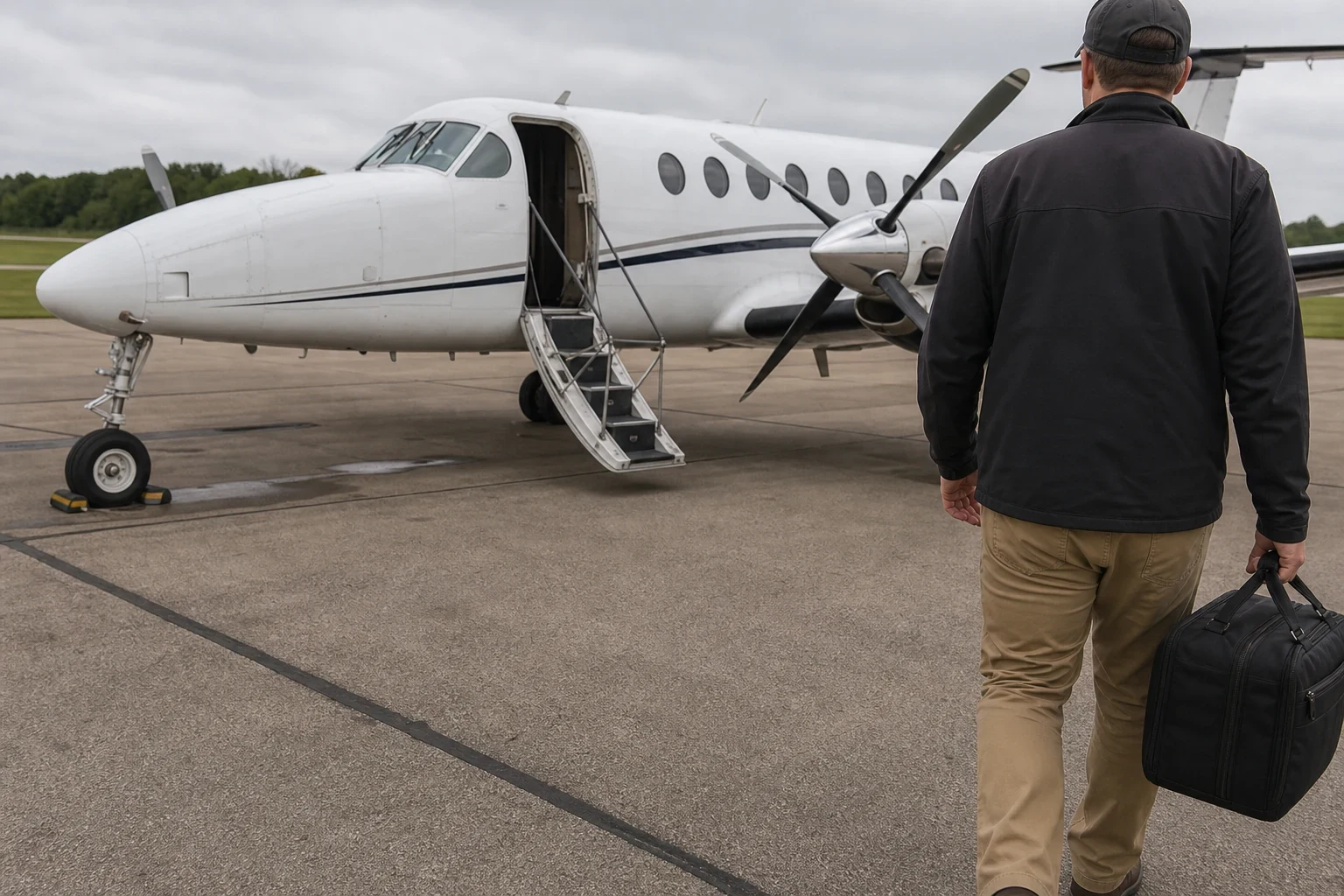
A turboprop is often the most sensible aircraft for trips under about 500 miles. We arrange point to point turboprop flights for six to nine passengers, operated by FAA-certified Part 135 air carriers, with an all-inclusive quote you see before you commit.
What a turboprop does well
A turboprop uses a turbine engine to drive a propeller. On the aircraft we arrange most often, that engine is a Pratt & Whitney PT6A. At regional distances and altitudes it burns less fuel per hour than a jet, and the straight wing and sturdy gear let it use shorter runways. On a trip to Chicago or Nashville, the time difference compared to a light jet is usually a matter of minutes.
Common types include the Pilatus PC-12, a single-engine cabin with a large rear cargo door, and the Beechcraft King Air 200 and 350, twin-engine aircraft with club seating. Both are pressurized, both carry six to nine passengers depending on layout, and both are built to keep flying for decades.
That last point shapes how we place every turboprop trip. A twenty-year-old King Air can be a better aircraft than a newer one if its operator has stayed ahead of its phase inspections and engine work. We have been in business 5 years, and we steer travelers toward operators who treat upkeep as a long-term practice rather than a deadline to meet.
What comes with a turboprop charter
- One price with everything in it
- Aircraft, crew, fuel, landing and FBO fees and federal excise tax are all in the quote. If a trip detail like an overnight crew stay would change the total, you hear about it before booking. There are no hidden costs.
- Billed by the leg
- You are charged only for the legs you take. A one-way flight is never billed at round trip pricing.
- Questions asked about your aircraft
- Before booking, we ask the operator about the exact aircraft: its place in the phase inspection cycle, how engine hours and trend data are tracked, and the date of its last major engine work. Operators with ready answers tend to be the ones who stay on top of it.
- Space for luggage, equipment and pets
- Golf bags, sample cases and oversized luggage that will not fit through a light jet's door go through the PC-12's cargo door. Pets are allowed, and we check crate size and cabin rules with the crew before the flight.
- WIFI when you ask
- Many turboprop trips can be flown on WIFI-equipped aircraft. Let us know you plan to work in the air and we quote only aircraft that offer it.
Signs a turboprop fits your trip
The flight is under about 500 miles
Below that range, a jet's speed advantage shrinks to minutes while its hourly cost stays higher. More of your budget goes into the trip itself.
The destination has a short runway
Many small regional fields suit a turboprop's slower approach speed better than a jet's. Landing closer to where you are going saves a long drive at the other end.
You are carrying bulky cargo
Trade show displays, tools or a family's worth of luggage fit through a wide cargo door and into a cabin with a flat, open floor.
A small team needs to be back by evening
Five colleagues from Greenwood or Franklin heading to a plant visit and home by dinner is the trip turboprops were made for. The aircraft and crew can wait on the ramp while you work.
You want one trip, not an arrangement
There are no long term commitments and no upfront account. You book a single flight, and the next one is quoted on its own.
How a turboprop trip comes together
- 1
Talk it through by phone
Tell us your dates, passenger count, bags, pets and where you want to land. We ask about runway preferences and whether you need WIFI. Our phone is answered 24/7, so a trip that comes up late at night can start right away.
- 2
Your quote, line by line
We source aircraft from Part 135 operators, check type and inspection status, and walk you through the all-inclusive quote by phone. You see what each piece costs and why.
- 3
Departure day at the FBO
You arrive at the FBO a short time before departure, park close to the ramp and skip the terminal line. The crew loads bags, gives a passenger briefing and you are airborne.
- 4
After you land
The aircraft taxis to the FBO at your destination, where any ground transport you arranged meets you. On your next trip, we already know your preferences.
What moves the price of a turboprop charter
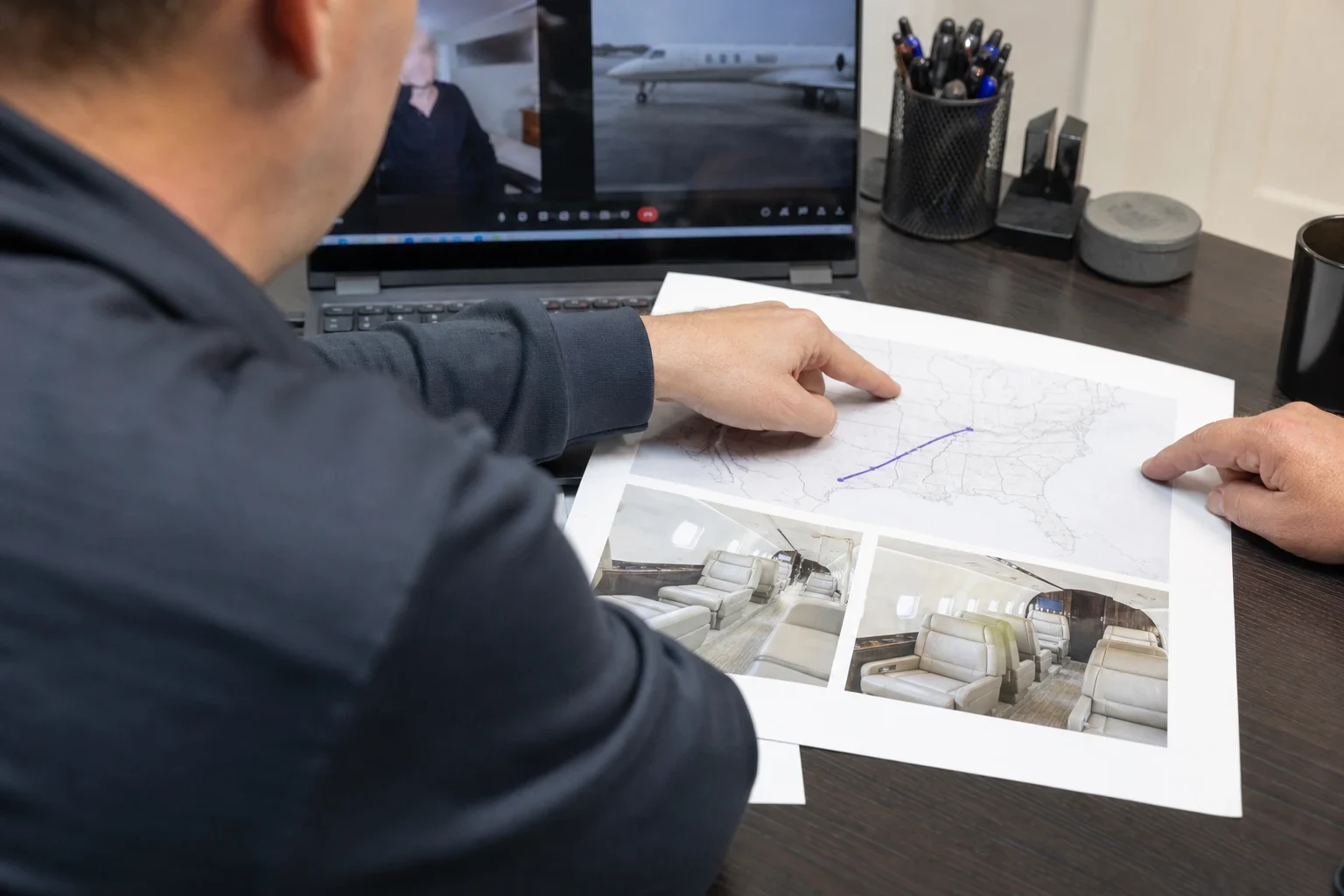
A turboprop quote is mostly flight hours multiplied by the aircraft's hourly rate, plus fees that depend on where and when you fly. We list each piece separately so you can see which choices drive the total.
- Flight time and positioning
- If the nearest suitable aircraft is based elsewhere, its time to reach you is part of the cost. We look for aircraft based close to your departure to keep that short.
- Single or twin engine
- A PC-12 usually costs less per hour than a King Air 350. Some travelers and company travel policies require two engines, and that choice moves the number.
- Overnights and wait time
- A crew that stays overnight adds hotel and per diem costs, and some operators set daily minimums. Returning the same day often avoids both.
- Airport and seasonal fees
- Landing fees and FBO handling vary by airport. In an Indiana winter, de-icing before departure can add a line item we flag in advance.
- Timing and demand
- Holiday weekends and large events tighten availability. Booking earlier gives us more aircraft to compare.
Questions about turboprop charter
Something not covered here? (317) 350-1382
How safe is a single-engine turboprop such as the PC-12?
The PT6A engine has flown for many years on a wide range of aircraft. Part 135 operators carrying passengers in single-engine aircraft in instrument conditions face extra FAA requirements, engine trend monitoring among them. If you prefer two engines, we will quote a King Air.
How noisy is a turboprop cabin?
It is louder than most jets, mainly a steady propeller hum near the front. Insulation keeps it low enough to talk normally, many aircraft have headsets on board, and seats toward the back are usually quieter.
What is a turboprop's nonstop range?
It varies with passengers, fuel and wind. Most of our turboprop trips run under about 500 miles, where these aircraft are most efficient, though many can cover 1,000 miles or more with a moderate load. On longer routes, Light Jet Charter or Midsize Jet Charter is usually the better choice, and we will say so.
Is my dog allowed on board?
Yes, pets are allowed. Tell us your pet's size and whether it will travel in a crate or on your lap, and we check the operator's cabin rules ahead of the flight.
How can I be sure the aircraft is kept up?
Every aircraft flown by a Part 135 operator must follow an FAA-approved inspection program. When we book a trip, we ask where that aircraft stands in its inspections and how it is cared for over time. We keep working with the operators who answer plainly.
Plan your next regional flight
Tell us where you are going and how many are flying, and we will build an all-inclusive turboprop quote with you by phone. If a jet fits the trip better, we will say so and quote that too.